
"coffee plant species"
8000 article(s) found

Introduction to Coffee planting and Primary processing of Ethiopian species and characteristics of Manor
Characteristics of Coffee cultivation and Primary processing in Ethiopia ET has long been one of the top ten coffee producing areas in the world, and is a pioneer in Africa. ET has a federal department, the coffee and tea Authority, that specializes in coffee and tea-related matters, such as setting purchase prices for washing plants. ET produces a lot of coffee, but it is different from other producing countries.

Coffee cultivation techniques
Coffee, cocoa and tea are called the three major beverages in the world, and their output, consumption and output value all rank first. In addition to being used as a beverage, coffee can also extract caffeine and coffee oil; in medicine, it can be used as an anesthetic, stimulant and diuretic cardiotonic agent.

How much do you know about the botany of coffee?
There are more than 60 kinds of coffee, but there are roughly two varieties of coffee grown commercially on a large scale, one is Arabica, accounting for about 70 percent of the world's coffee planting area, and the other is Robasta, accounting for about 30 percent of the world's coffee planting area.

What are the coffee beans of Arabica? what is the variant of Arabica bourbon tin pickup?
Professional coffee knowledge exchange more coffee bean information please pay attention to the coffee workshop (Wechat official account cafe_style) Arabica species evolved varieties [Typica] Tibica species closest to the original species. The bean shape is slightly longer, like an elongated egg, known as Arabigo or criollo in Central America. It has a clean taste of citric acid, sweet finish and low resistance to leaf rust.

What are the classification of coffee varieties and what are the common coffee varieties?
Based on the classification of coffee varieties: ① according to large varieties, coffee can be simply divided into Arabica species and Robusta species. In general, Arabica tastes better than Robsta (it is not so simple to generalize). For example, we often hear a fast food chain claiming to use 100% Arabica coffee beans. But it is important to note that Arabica does not necessarily represent

Coffee botany is mainly divided into the following five varieties
There are more than 60 types of coffee classified, but there are roughly two varieties of coffee grown commercially on a large scale, one is Arabica, accounting for about 70 percent of the world's coffee planting area, and the other is Robasta, accounting for about 30 percent of the world's coffee planting area. According to our national standards, the classification of coffee is mainly divided into the following five varieties. 1. Small seed coffee, that is, Arabian species. Original production
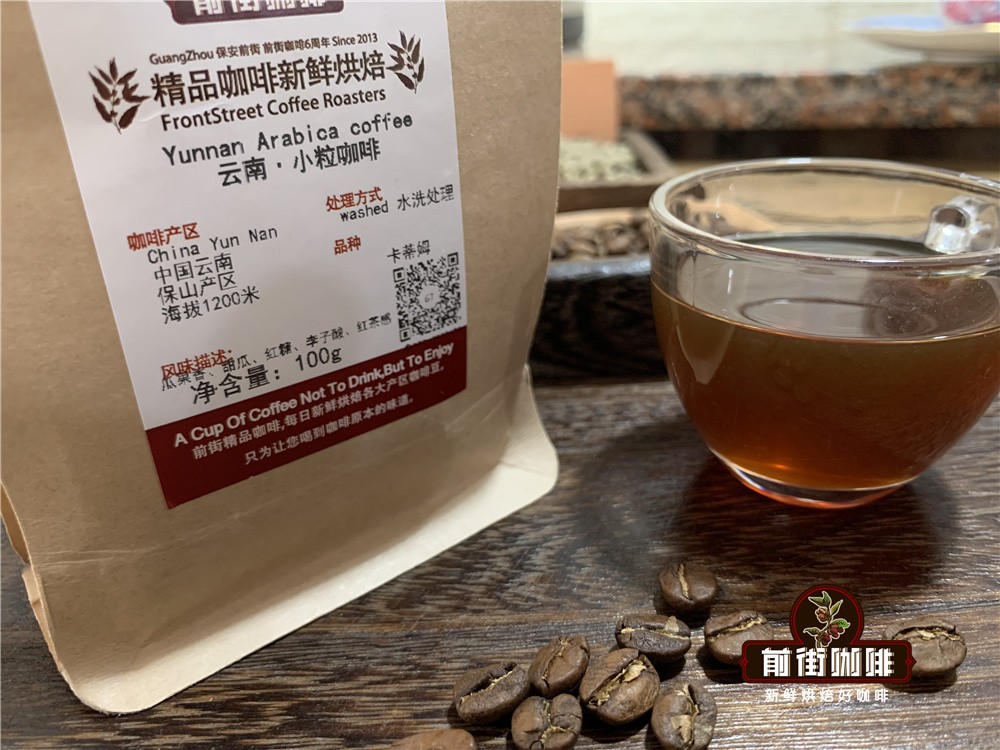
Introduction to the basic knowledge of Yunnan Fine Coffee Bean varieties description of hand-made taste of Yunnan small-grain coffee
[scientific name] small grain species are CoffeaarabicaL., medium grain species are Coffeacanephora, large grain species are Coffealiberica family genus: Rubiaceae Coffea [alias] small grain species, also known as Arabian species, medium grain species also known as Gaffra species, large grain species also known as large seed species

What kind of coffee beans are made by hand? what kind of coffee beans can be made and tasted good?
Professional coffee knowledge exchange more coffee bean information Please pay attention to the coffee workshop (Wechat official account cafe_style) the determinants of a good cup of coffee, 70% comes from the internal quality of beans, while the quality of beans lies in the variety, good varieties grow and blossom and bear fruit in a suitable micro-climate environment, after appropriate post-processing (washing / sun / semi-washing / honey place) after harvest

A brief introduction to the planting Market Price of High-quality and delicious Coffee Bean varieties in Kahayang Gan Manor
According to the statistics of the International Coffee Organization (ICO), excluding the domestic transactions of each coffee-producing country, about 65% of the coffee in circulation in the world market is Arabica and 35% is robusta. Arabica species are characterized by slender and flat grains. Robusta coffee beans are more round. From their shape, we can easily tell that West Africa is the origin of coffee grown in Liberia.

How many regions and characteristics of coffee species are roughly distributed in the world?
Professional coffee knowledge exchange more coffee bean information Please pay attention to the coffee workshop (Wechat official account cafe_style) Coffee beans can be divided into Arabica species and Robusta species in the global coffee, Arabica species account for about 70% of the total output, has important commercial value. Arabica species spread from the Arabian Peninsula to all parts of the world, depending on the route of transmission.

Introduction to the types of coffee beans apart from Arabica, what coffee beans can compete with one?
Professional coffee knowledge exchange more coffee bean information please follow the coffee workshop (Wechat official account cafe_style) front street-coffee bean varieties introduction Arabica species (Coffee Arabica) Arabica species, namely small seeds. The country of origin is the Abyssinia Plateau of Ethiopia (that is, Ethiopia). It was mainly used for medicinal purposes in the early days, and was cultivated in the 13th century.
Arabica coffee bean planting species morphology Colombian coffee bean
The main varieties of Colombian coffee are small grains of coffee. Plants are small trees or large shrubs, 5-8 m tall, usually much branched at base; old branches gray-white, nodes dilated, young branches glabrous, compressed. Leaves thinly leathery, ovate-lanceolate or lanceolate, 6-14 cm long and 3.5-5 cm wide, tip long acuminate, acuminate part 10-15 mm long, base cuneate or slightly obtuse, rarely rounded, entire or

Ethiopian original-[more than 3000 species of coffee beans fall into this category]
Professional coffee knowledge exchange more coffee bean information please follow the coffee workshop (Wechat official account cafe_style) Ethiopian original [about more than 3000 species of coffee beans belong to this category] there are more than 3000 varieties of coffee beans growing in Ethiopia alone, people usually choose a few varieties to plant, as for the original Ethiopian coffee trees, because no matter

Meng Lian Mangzhang Manor | Sun Katim flavor | how to drink Yunnan coffee?
Professional coffee knowledge exchange more coffee bean information please follow the coffee workshop (Wechat official account cafe_style) Yunnan was first introduced by French missionaries in 1902, there are still 24 coffee trees more than 90 years old in Zhukula Township, Binchuan County. In 1914, the border people of the Ruili Jingpo nationality were introduced from Burma to Nongxian Village. The variety types are small grain species, medium grain species and large grain species. Straight stem
What kind of coffee do Liberica coffee beans belong to? How does Liberia compare with Arabica?
There are more than 120 identified species of coffee. Producers, traders, roasters, baristas and consumers will be mainly familiar with two of them: Arabica coffee and robusta coffee. However, the third species after these two species is mainly grown in Southeast Asia: free coffee. Today, it has become the main species of coffee grown in Malaysia and the Philippines. So, lib

Introduction to the planting environment of Rwanda boutique coffee bean flavor manor with excellent evenness
Rwanda has tin, tungsten, niobium, tantalum, Beryl, gold and so on. The storage of tin is about 100000 tons. Peat reserves are estimated at 30 million tons. Lake Kivu has natural gas reserves of about 60 billion cubic meters. The Niagabango tungsten deposit is the largest tungsten mine in Africa. The forest covers an area of about 620000 hectares, accounting for 29 per cent of the national area, and is one of the important natural resources of Rwanda. [3] Plant Luwang

Honduras Coffee Bean | Willow Manor | Franklin Madrid | introduction to Pacas species
For more information on coffee beans, please refer to the recommendation of coffee beans in the front street of the coffee workshop (Wechat official account cafe_style)-- Honduras Sweet Orange Manor | Honduras San Juan Candora Willow Manor | Franklin Madrid | Pacas species | washing production area: Franklin Madrid Variety: pacas treatment: washing flavor

Nicaraguan Lemon Tree Coffee Manor Story characteristics of sipping Flavor of Java Coffee Bean
Java species are similar in shape to ladder card species, and most Java species are short-grained Slor Ber), while Java species with long grain (Long Ber) are few, and Java is a rare Java long grain. Variety and appearance are rare, but the flavor is very clean and delicate. There has never been a similar flavor in the history of Nicaraguan coffee. Java provenance comes from iron seed system, Nicaraguan coffee has always been

Detailed graphic introduction of which baking degree is suitable for Katim coffee beans
Some varieties are derived from natural genetic mutations, while others are the products of artificial cross breeding or acquired breeding of native species. Arabica species are self-pollinating plants, and their genetic lineage should be quite pure. But the Tibika species and the bourbon species were taken to new countries successively, and the exotic climate conditions led to natural genetic mutations.

Coffee basics two coffee varieties of coffee beans
Linnaeus (Swedish naturalist) classifies coffee plants into the Rubiaceae family, such as gardenia. The great naturalist named it Coffea. Although wild plants can grow as high as 10-12 meters, the plantations are about 3 to 5 meters high, with the exception of Colombia, where tree species rarely exceed 2 meters. This makes farming and picking easier and more economical to cultivate. Leaves